Sugar, Spice, and Centuries of Know-How: The Real Reason Indian Peach Preserves Outlast Your Homemade Jam
You did everything right. You sterilized the jars, used fresh summer peaches, followed the recipe to the letter. And yet, three weeks later, there's a fuzzy gray bloom creeping across the surface of your homemade jam. Meanwhile, a jar of Indian peach murabba you picked up at a specialty grocery store has been sitting on your counter for four months and looks absolutely fine.
What gives?
The answer isn't some industrial preservative or commercial secret. It's something far more interesting — a set of time-tested techniques developed over centuries in the orchards and home kitchens of the Himalayas, where peach season is short, winters are long, and wasting fruit was never an option.
The Sugar Ratio That Changes Everything
Most American jam recipes call for roughly equal parts fruit and sugar — sometimes even slightly less sugar than fruit. It feels intuitive. You want the peach to be the star, not the sweetness.
But here's the thing: sugar isn't just a flavor ingredient in traditional Indian preserves. It's doing the heavy lifting of preservation. In a properly made murabba or sharbat base, the sugar concentration is high enough to create what food scientists call a low water activity environment. Essentially, there's so little free water available in the jar that mold and bacteria can't get the foothold they need to grow.
Traditional Indian peach murabba recipes often use a 1:1 ratio by weight of fruit to sugar — and then some. The fruit is cooked down in a thick sugar syrup that reaches a specific density, sometimes tested the old-fashioned way by dropping a small amount into cold water and watching how it behaves. That thick, glossy syrup surrounding each piece of peach isn't just beautiful. It's a microbial barrier.
Compare that to a typical American jam, where the sugar-to-fruit ratio might be lower and the final product retains more moisture. That extra moisture is exactly what mold is looking for.
Spices Aren't Just for Flavor
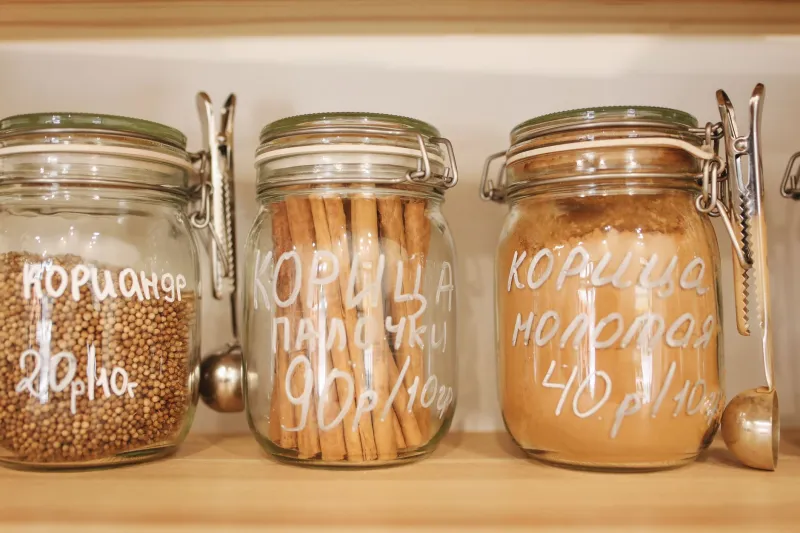
Open a jar of Indian peach preserve and you'll likely find cardamom pods, a curl of cinnamon, maybe a few strands of saffron or a pinch of black pepper. American cooks often assume these are purely for taste — a nod to exotic flavor profiles. But many of these spices carry genuine antimicrobial properties that work alongside the sugar to extend shelf life.
Cardamom, for instance, contains compounds like cineole and terpinene that have demonstrated antimicrobial activity in food science research. Cinnamon is well-documented for its ability to inhibit certain molds and bacteria. Even the small amount of acid traditionally added to some Indian preserves — sometimes in the form of dried amchur (green mango powder) or a squeeze of lime — helps lower the pH of the final product, making it a less hospitable environment for spoilage organisms.
This isn't accidental folk wisdom. Generations of home cooks in the Himalayan foothills of Himachal Pradesh and Uttarakhand were essentially running informal experiments in food safety every time they put up a batch of preserves. The recipes that survived and got passed down were the ones that worked.
The Aging Method Nobody Talks About
One of the most overlooked aspects of traditional Indian peach preservation is the curing period — the weeks or months after sealing when the preserve is left undisturbed, often in a cool, dark spot or even in the sun (yes, really).
Sun-curing, a practice still used in some Himalayan households, involves placing sealed jars of preserve in direct sunlight for a period of days or weeks. The gentle, consistent heat drives out residual moisture and helps the sugar syrup penetrate deeper into the fruit. The result is a product with even lower water activity than you'd get straight off the stove.
For American home cooks, replicating this doesn't require a Himalayan hillside. A sunny windowsill or a warm spot in your kitchen during summer months can work. The key is patience — something our culture of instant results doesn't always make easy.
A Conversation with Someone Who Knows
We spoke with Priya Nanda, a food scientist and home preserving enthusiast who grew up in Shimla and now lives in Portland, Oregon, where she runs preservation workshops for local home cooks.
"The biggest mistake I see American home cooks make is treating sugar as optional or something to minimize," she told us. "In Indian preserving traditions, sugar is structural. It's not there just to make things sweet — it's there to make things safe."
Priya also pointed out that traditional Indian preserves are rarely processed in a water bath canner the way American jams typically are. "The high sugar concentration does the work that the water bath is supposed to do. When you have that much sugar and the right spices, you don't need the same level of heat processing. The product is shelf-stable on its own."
She's quick to add that this doesn't mean anything goes. "You still need clean jars, clean hands, and good fruit. The technique isn't magic — it's chemistry. Respect the ratios and the method and it works. Cut corners and you'll have the same moldy mess as anyone else."
A Foolproof Himalayan-Style Peach Murabba to Try at Home
Ready to put this into practice? Here's a straightforward recipe that draws on traditional North Indian preservation methods and produces a preserve that will last — properly stored — for up to six months at room temperature.
What you'll need:
- 2 lbs ripe but firm peaches (about 6 medium), peeled and pitted, cut into halves or thick wedges
- 2 lbs granulated white sugar (yes, equal weight to your fruit)
- 1 cup water
- 6 green cardamom pods, lightly crushed
- 1 cinnamon stick
- ¼ tsp black pepper, freshly ground
- 1 tbsp fresh lime juice
- Pinch of saffron (optional, but worth it)
Method:
- Combine sugar and water in a heavy-bottomed pot over medium heat. Stir until sugar dissolves, then add cardamom, cinnamon, and black pepper. Let the syrup simmer for 5 minutes.
- Add peach pieces and lime juice. Cook over medium-low heat, stirring gently, for 25–35 minutes. You're looking for a thick, glossy syrup that coats a spoon and, when dropped into cold water, holds a soft ball shape.
- If using saffron, stir it in during the last 5 minutes of cooking.
- Ladle into clean, dry glass jars (no need to sterilize if your jars are freshly washed and completely dry — moisture is the enemy here). Fill to within half an inch of the top and seal tightly.
- Allow jars to cool completely, then place in a sunny spot for 3–5 days before storing in a cool, dark pantry.
The result is something deeply fragrant, jewel-toned, and utterly unlike anything you'll find at the grocery store. Serve it alongside soft cheese and crackers, spoon it over yogurt, or gift it in a pretty jar to someone who deserves something special.
The Bigger Lesson
The peach paradox — Indian preserves that last for months versus American jams that mold in weeks — isn't really a paradox at all once you understand the science. It's a story about what happens when a food culture develops techniques not for novelty, but out of genuine necessity.
Himalayan peach growers couldn't afford to lose their harvest to spoilage. They couldn't run to a grocery store. So they got the chemistry right, and they got it right so consistently that those methods are still being used today — and now, increasingly, in home kitchens across the US.
Your jam doesn't have to keep molding. It just needs a little Himalayan wisdom.