How to Read a Peach Before You Ever Take a Bite: The Indian Farmer's Playbook
Most of us evaluate a peach the same way: we squeeze it gently, sniff the stem end, and maybe check for bruises. If it passes those three tests, it goes in the basket. That's not a bad system, but it's also a pretty thin one — and it leaves a lot of information on the table.
In the peach-growing regions of Himachal Pradesh and Uttarakhand, where families have been cultivating fruit in high-altitude orchards for generations, the evaluation process looks completely different. Farmers and home cooks there treat a peach almost like a document — something to be read carefully before any decision gets made about how to use it. The stone, the skin, the flesh color, the weight in your hand, the way the fruit sits — all of it communicates something specific about where the peach came from, how it grew, and what it's best suited for in the kitchen.
Once you start reading peaches this way, the whole experience of cooking with them changes. Here's how to start.
Start With the Weight
Pick up the peach before you look at it closely. A Himalayan-origin or Indian hill-station variety will often feel denser than its size suggests — heavier per inch than a commercial supermarket peach. That density is a good sign. It usually indicates a higher flesh-to-water ratio, which translates to more concentrated flavor and better performance in cooked applications like chutneys, reductions, and baked goods where excess moisture is the enemy.
A peach that feels light or hollow for its size may have developed too quickly — often a result of over-irrigation or excessive heat during the ripening window. It'll taste watery, and it'll break down unevenly in the pan. Save those for eating out of hand, if they're worth eating at all.
The Skin Tells the Climate Story
Run your thumb across the skin without pressing into the flesh. What you're feeling for is texture and thickness — two things that reveal a surprising amount about how the fruit grew.
Thin, almost papery skin with a slight give is a classic marker of fruit that ripened slowly in a cooler, high-altitude environment. These peaches are more delicate to handle but deliver more nuanced flavor, particularly in fresh preparations and light preserves where the skin's contribution matters. Indian murabba makers specifically seek this type for the way the skin absorbs spiced syrup without dissolving.
Thicker, slightly waxy skin indicates a fruit that ripened faster in warmer conditions. That's not necessarily a flaw — it just means the peach will perform differently. Thicker-skinned varieties hold their shape better in long-cooked preparations and stand up well to the heat of a tawa or cast-iron skillet. If you're making a peach achaar or a slow-cooked savory preparation, this is actually what you want.
The Pit-to-Flesh Ratio: More Revealing Than You'd Think
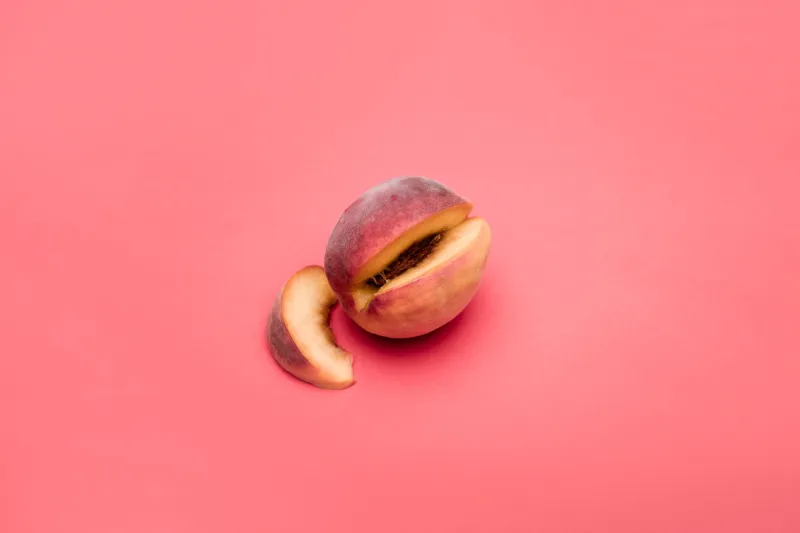
This one requires cutting into the fruit, but it's worth making it a deliberate part of your evaluation rather than an afterthought. Halve the peach along its seam and look at the proportion of stone to flesh.
Himalayan varieties tend to run smaller stones relative to their overall size — a characteristic that developed over centuries of selection by farmers who were, quite practically, maximizing the edible yield per fruit. A large stone relative to the flesh is a red flag for older, less-selected stock or for fruit that was grown under stress conditions that stunted flesh development.
Beyond proportion, look at the stone itself. A clean, dry stone that separates easily from the flesh (freestone, in American peach terminology) suggests the fruit hit full maturity. A stone that clings or shows wet, slightly fermented-smelling flesh around it means the fruit either over-ripened on the tree or was harvested too late. The flavor will be uneven — sweet in some spots, slightly alcoholic or flat in others.
Color Gradations Are a Flavor Map
The blush on a peach's skin is decorative. The color of the flesh is informational.
Deep gold or amber flesh, especially when it grades from a richer tone near the stone to a lighter shade at the skin, signals high carotenoid content — the compounds responsible for both that warm color and a significant portion of the peach's aromatic complexity. Indian cooks have long associated this color profile with fruit best suited to preservation: the natural antioxidant content helps the fruit hold its character through cooking and long storage.
Paler, cream-to-white flesh is a different creature entirely. These varieties tend toward a more delicate, floral flavor profile with less of the tannic edge that makes darker-fleshed peaches so interesting in savory contexts. They're beautiful in fresh applications — sliced thin over yogurt, folded into a simple lassi, or used in a light syrup where you want the fruit to whisper rather than shout.
Watch for gray or brownish discoloration near the stone even in an otherwise firm peach. That's internal breakdown — a sign of chilling injury if the fruit was stored too cold, or early senescence in a variety that was held too long after harvest. The flavor around that area will be flat and slightly bitter.
The Stem Scar and What It Says About Timing
Flip the peach over and look at where the stem was. A clean, dry scar with no sticky residue and no green tinge around the edges means the fruit separated from the tree at the right moment — it wasn't pulled early, and it wasn't left to drop. That's the sweet spot, and it's something Indian orchard workers learn to identify by feel as much as sight.
A green or slightly tacky stem scar usually means early harvest — the fruit wasn't finished. It'll ripen off the tree, but it won't develop the same complexity as tree-ripened fruit. You can still use it, but treat it as a cooking peach rather than an eating peach and compensate with a touch more sweetness in your recipe.
Putting It Together in the Kitchen
Once you've run through this evaluation, you're not just holding a peach — you're holding a set of instructions. Dense, thin-skinned, amber-fleshed fruit with a small freestone and a clean scar? That's your preserve peach, your murabba candidate, your star in a slow-cooked reduction. Lighter flesh, thicker skin, a little more give? That's your grilling peach, your savory chutney base, your peach that will hold its shape under heat.
This isn't about gatekeeping or making cooking more complicated. It's the opposite — it's about removing the guesswork that leads to disappointing results. Indian farmers developed these evaluation habits because they were cooking with and selling fruit that had real variation, and they needed a system. That system works just as well in a kitchen in Portland or Philadelphia as it does in an orchard in Shimla.
Start reading your peaches. They've been trying to tell you something all along.