Ditch the Recipe Card: Why American Home Cooks Are Preserving Peaches the Indian Way
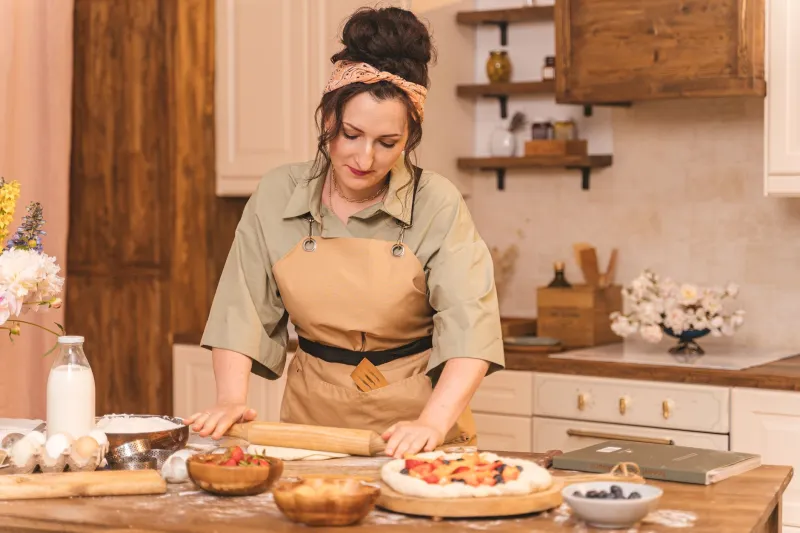
Somewhere in a kitchen in Asheville, North Carolina, a home cook named Priya is stirring a pot of peaches without a single recipe in sight. No USDA canning guide. No tested processing times. No Ball Blue Book open on the counter. She's working from a combination of muscle memory, a phone call with her aunt in Chandigarh, and a set of sensory cues — color, smell, the way the fruit moves in the pot — that she's been building up over the last three seasons of experimentation.
Her shelves hold jars of peach preparations that her American neighbors can't quite categorize. Not jam, not pickles, not chutney exactly. Something older and more alive than any of those labels suggest.
Priya isn't alone. Across the US, a loosely connected community of home cooks — some of South Asian descent reconnecting with family traditions, others with no personal ties to India at all — is quietly abandoning the written recipe as the primary tool for peach preservation. What they're turning to instead is a tradition rooted in the peach-growing regions of northern India: fermentation, brining, slow-cook reduction, and the kind of knowledge that travels through conversation and demonstration rather than text.
Why Written Recipes Fall Short With Himalayan Peaches
This shift isn't happening in a vacuum. It's partly a response to a real practical problem: standard American canning and preservation methods were developed around standard American peaches, and Himalayan and Indian-origin varieties behave differently enough that following conventional recipes often produces disappointing results.
The sugar content in high-altitude Indian peaches is distributed differently than in commercial cultivars. The acid levels vary in ways that affect gel formation and fermentation dynamics. The skin and flesh break down at different rates under heat. Home cooks who've tried to apply a standard jam recipe to fruit from a Himalayan-origin tree often end up with something too loose, too dark, or missing the aromatic complexity that made the peaches worth preserving in the first place.
Traditional Indian preservation methods, by contrast, evolved alongside these specific fruits. They're calibrated — not through written formulas, but through generations of sensory feedback — to the exact chemical and textural properties that make Himalayan peaches what they are. The techniques work because they were built for the fruit, not retrofitted onto it.
The Oral Tradition as a Living Technology
What does it actually look like to learn preservation through oral tradition rather than a recipe? According to people who've made the switch, it's slower, more social, and ultimately more instructive than any written guide.
Marco, a home cook in the Bay Area who started experimenting with Indian peach preservation after a trip to Himachal Pradesh, describes his learning process as "reverse-engineering through asking." He reached out to older women in online communities connected to Himachali diaspora groups, described what he had — the variety, the ripeness, the intended use — and received guidance that was specific, contextual, and completely unlike anything he'd found in a cookbook.
"They'd tell me things like, 'when the color of the syrup looks like evening light through a glass of chai, it's ready,'" he says. "Which sounds vague until you've seen it a few times, and then it's actually more precise than a temperature reading."
That kind of sensory language — color comparisons, smell descriptions, texture metaphors — is the backbone of Indian preservation oral tradition. It's not imprecise; it's calibrated to human perception in a way that written instructions often aren't. A home cook who's been told to watch for "evening chai color" in their peach syrup is building an embodied understanding of the Maillard reaction and sugar concentration that will serve them better across dozens of future batches than a number on a candy thermometer.
Fermentation as the Heart of the Tradition
If there's one technique that most dramatically separates Indian peach preservation from conventional American methods, it's fermentation — and specifically, the use of controlled lacto-fermentation and salt-based brining in ways that American home cooks have historically applied only to vegetables.
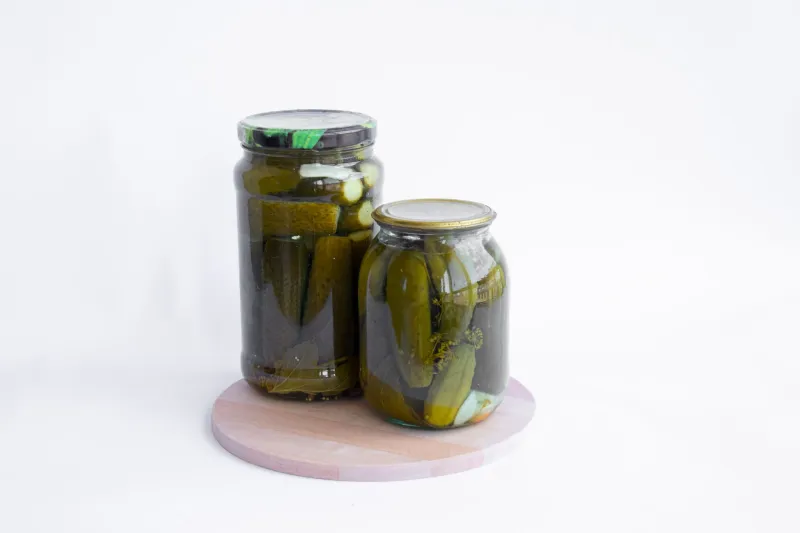
In parts of Himachal Pradesh and Uttarakhand, slightly underripe peaches are preserved in salted, spiced brines that create a tangy, complex condiment with a shelf life that far exceeds most American canned preparations. The salt inhibits spoilage organisms while allowing beneficial bacteria to develop flavor compounds that no amount of cooking can replicate. The result is something that sits in the flavor neighborhood of a pickle and a chutney simultaneously — bright, funky, deeply savory, with enough acidity to cut through rich dishes and enough fruit character to pair with something delicate.
American home cooks who've adopted this approach report that it's actually simpler than water-bath canning once you understand the principles. There's no sterile jar processing, no precise headspace measurement, no anxiety about botulism in a high-acid environment. The brine handles the safety. Your senses handle the timing.
Community as Infrastructure
One of the most interesting aspects of this movement is how it's organizing itself — not around recipe websites or YouTube channels, but around genuine community networks. Private Facebook groups, neighborhood fermentation circles, informal mentorship arrangements between experienced South Asian home cooks and curious newcomers.
Sunita, who runs a small peach preservation workshop out of her home in Seattle, describes the dynamic as "knowledge being passed sideways as much as downward." She learned the basics from her mother and grandmother, but a significant portion of what she now knows came from peers — other home cooks who were experimenting, failing, adjusting, and sharing what they found.
"There's no authoritative text for this," she says. "And that used to feel like a problem. Now I think it's actually why the tradition stays alive. It has to keep moving through people to survive."
That mobility is something written recipes can't replicate. A cookbook sits still. A community of people who are actively cooking, tasting, and talking generates a kind of ongoing calibration that keeps the knowledge current and responsive to the actual fruit available in a given season and region.
What Home Cooks Are Actually Making
The range of preparations coming out of this movement is striking. Beyond the brined pickles and murabbas (the slow-cooked spiced preserves that are perhaps the most iconic Indian peach tradition), home cooks are experimenting with:
- Peach kanji: a fermented, mildly sour peach drink in the tradition of carrot kanji, built around the natural microbial activity of the fruit
- Sun-dried peach leather with spiced coatings: a preservation method that requires no refrigeration and concentrates flavor dramatically
- Slow-cooked savory peach pastes spiced with black cardamom, dried ginger, and nigella seed — used as a condiment with flatbreads and grilled meats
- Salt-cured peach halves preserved in mustard oil with fenugreek and turmeric, which develop a complex funkiness over months of slow fermentation
None of these have standardized recipes in the American sense. All of them, according to the people making them, taste better than anything they produced when they were following instructions.
The Bigger Shift
What this movement really represents, underneath the specific techniques and traditions, is a different relationship to knowledge in the kitchen. American food culture has spent decades professionalizing home cooking — teaching people to follow recipes precisely, measure carefully, and trust the tested formula over their own judgment. That approach produces reliable results with standardized ingredients. But it also produces a kind of learned helplessness, a sense that cooking well requires an external authority telling you what to do.
Indian peach fermentation traditions work from the opposite premise: that the cook's developing judgment is the technology, and the fruit's behavior is the guide. It's a more demanding approach in some ways. It requires patience, attention, and a tolerance for uncertainty that recipe culture actively discourages.
But for home cooks who've made the leap, there's no going back. The peaches are better. The process is more satisfying. And the knowledge, once it's in your hands, belongs to you in a way that a recipe card never quite does.