Sip, Sniff, Bite: A Home Cook's Guide to Tasting the Himalayas Through Every Peach
Wine people have been doing it for decades. You swirl, you sniff, you sip — and then someone confidently announces that this particular Pinot tastes like it grew on a fog-kissed hillside in Sonoma rather than a sun-baked valley floor in Paso Robles. It sounds pretentious until you actually try it, and then suddenly it makes complete sense.
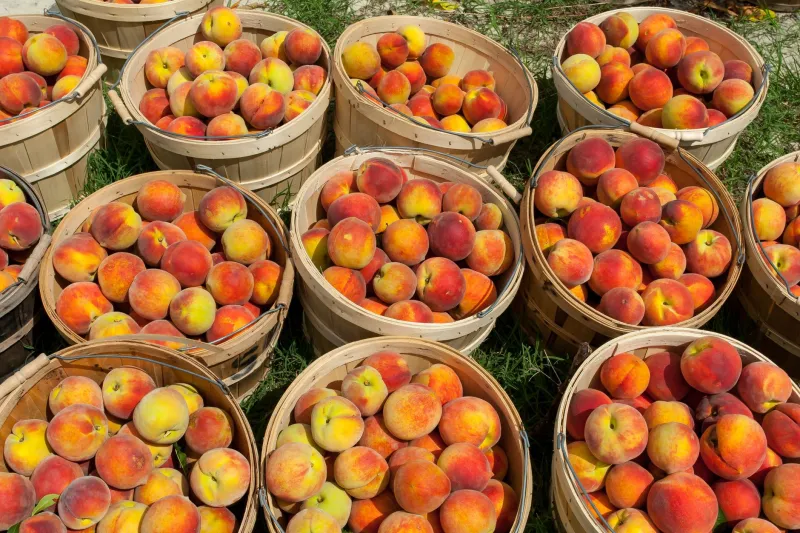
Peaches deserve the same treatment. Especially Himalayan peaches.
The fruit coming out of India's high-altitude growing belts — places like Himachal Pradesh's Kullu Valley, the slopes around Shimla, the terraced orchards of Uttarakhand — carries flavor information baked right into its flesh. Elevation, soil type, diurnal temperature swings, rainfall patterns, even the specific angle of afternoon sun: all of it shows up on your palate if you know what you're looking for. And the really exciting part? American home cooks can absolutely learn to read those signals — and then use that knowledge to source, grow, or cook with peaches that capture something genuinely special.
Think of this as your starter kit for peach terroir.
What Terroir Actually Means for a Peach
The word terroir comes from the French wine world, but the concept is universal. It basically means "a sense of place" — the idea that where something grows shapes how it tastes in ways that are measurable, repeatable, and specific.
For peaches, the key variables are elevation, temperature range, soil composition, and water source. A peach grown at 7,000 feet in thin mountain air and cool nights develops differently than one grown at 2,000 feet in humid valley heat. The cooler temperatures slow the ripening process, concentrating sugars more gradually and allowing the fruit to build complexity. The soil — whether it's rocky and mineral-rich or loamy and deep — affects both nutrient uptake and drainage, which in turn shapes texture and flavor intensity.
Himalayan orchards sit at elevations ranging from roughly 3,000 to over 9,000 feet depending on the region. That's a wild range, and it produces genuinely distinct flavor profiles across growing areas that are sometimes just a few valleys apart.
A Tasting Map: Flavor Profiles by Region and Elevation
Here's where it gets fun. Consider this your rough field guide — not a scientific document, but a sensory starting point based on what growers, traders, and culinary researchers have observed across India's peach-producing regions.
Lower Himalayan Foothills (roughly 3,000–5,000 ft) — Think: Ripe, Jammy, Floral
Peaches from the lower elevations of Himachal Pradesh and Uttarakhand tend to ripen earlier in the season and develop a bold, almost syrupy sweetness. These are your classic summer peaches on steroids — juicy, aromatic, with a floral top note (sometimes described as rose-adjacent) and a finish that lingers warmly. The flesh is often softer, with that melt-in-your-mouth quality that makes them ideal for fresh eating, chutneys, and drinks like sharbat. If you've ever bitten into a peach and thought "this is basically dessert on its own," you were probably eating something from this elevation band.
American equivalent to chase: Look for late-summer Georgia or South Carolina freestone peaches at peak ripeness — or better yet, find a farmers market vendor who grows at higher elevations in the Carolinas or Tennessee hills.
Mid-Altitude Orchards (roughly 5,000–7,500 ft) — Think: Balanced, Bright, Slightly Tangy
This is the sweet spot, literally. Orchards in the Kullu Valley and around Shimla sit in this range, and the peaches they produce have a tension between sweetness and acidity that makes them incredibly versatile in the kitchen. You'll notice a brighter, almost citrus-like edge on the front of the bite, followed by a deep peachy sweetness that doesn't overwhelm. These peaches hold their shape better when cooked, making them favorites for Indian-style pickles, murabba, and savory preparations like peach-based chutneys served alongside dal or grilled meats.
American equivalent to chase: Colorado's high-country peaches — particularly from the Palisade region — share some of this character. The altitude and dramatic day-to-night temperature swings create a similar acid-sugar balance.
High-Altitude Alpine Orchards (roughly 7,500–9,000+ ft) — Think: Austere, Mineral, Intensely Aromatic
These are the rarest and most interesting peaches in the Himalayan growing world. At this elevation, the growing season is short, the nights are cold, and the fruit has to work hard. What you get is a peach that's smaller, sometimes a little less juicy, but with an almost electric aromatic intensity and a subtle mineral quality — that faint rocky, clean note you sometimes get in high-altitude spring water. These peaches aren't as immediately crowd-pleasing as their lower-elevation cousins, but they're endlessly interesting to cook with. They make preserves and dried leather with extraordinary depth.
American equivalent to chase: Honestly, this profile is hard to replicate with commercial fruit. Your best bet is to grow your own — look into Himalayan-origin cultivars like 'Flordasun' adapted to cool climates, or seek out specialty orchards in the Pacific Northwest's Cascade foothills.
How to Actually Taste for This at Home
You don't need a sommelier's vocabulary or a fancy tasting kit. Here's a simple approach that works at your kitchen counter:
Step 1 — Smell first. Before you bite, hold the peach close and breathe in. Is the aroma soft and floral? Sharp and fruity? Faint and mineral? Your nose picks up volatiles that your tongue can't, and the aromatic profile is often the clearest indicator of growing conditions.
Step 2 — Taste in thirds. Take a small bite from the skin side, then the middle flesh, then as close to the pit as you can get. The flavor often changes across these zones — the skin area tends to carry more tannin and acidity, while the flesh near the pit is frequently the sweetest and most concentrated.
Step 3 — Note the finish. After you swallow, wait fifteen seconds. What's left? A clean sweetness? A slight tartness? A faint floral or herbal note? The finish is where terroir tends to show up most clearly.
Step 4 — Write it down. Even a few words — "bright, citrusy, short finish" versus "jammy, floral, long and warm" — gives you something to compare next time.
Bringing This Into Your Cooking
Once you start thinking about peaches this way, your recipe decisions start to shift. That lower-elevation, super-sweet peach? It barely needs sugar in a dessert — lean into it with spiced preparations like cardamom-spiked lassi or a simple halwa where the fruit itself carries the sweetness. The mid-altitude, balanced peach? Perfect for anything where you want brightness alongside richness — a peach-tamarind chutney, a grilled peach salad with chaat masala, or a slow-cooked pickle that needs both acidity and depth. The high-altitude, mineral peach? Use it where you want intensity in a small package — preserves, concentrated sauces, or a peach leather that you can crumble over yogurt for a layered, complex bite.
The goal isn't to make cooking more complicated. It's to make it more intentional — to pick up a peach at the farmers market or pull one from your backyard tree and actually think: what does this fruit want to be?
That's the Himalayan orchard tradition in a nutshell. Generations of Indian growers learned to work with what the mountain gave them, not against it. Your kitchen can do the same thing, even if the closest mountain is a few states away.