Same Fruit, Completely Different Flavor: The Case for Thinking About Where Your Peach Comes From Before You Cook It
We talk about terroir constantly when it comes to wine. The same grape variety grown in Burgundy versus Napa produces wines so different that trained tasters can identify them blindfolded. Nobody finds this surprising anymore — we've accepted that place shapes flavor in a profound way.
So why don't we apply the same thinking to peaches?
I'd argue we should. And once you start, it changes how you shop, how you cook, and — if you're making recipes rooted in Indian culinary tradition — how successfully you can actually pull them off.
What Terroir Even Means for a Piece of Fruit
The word terroir comes from French wine culture and refers, loosely, to the complete natural environment in which a crop is produced: soil composition, climate, altitude, sun exposure, and even the microbial communities living in the earth beneath the roots. All of those factors influence the chemical compounds that develop in a fruit as it grows, which means they directly shape flavor, aroma, acidity, and sweetness.
For peaches specifically, a few variables matter more than others.
Temperature swings between day and night are a big one. Peaches that experience significant diurnal temperature variation — warm, sunny days followed by cool nights — develop more concentrated sugars and more complex aromatic compounds. The cool nights slow the fruit's respiration, essentially letting it hold onto more of what it's built during the day.
Altitude compounds this effect. Higher elevations mean more intense UV exposure, which stresses the fruit in a productive way, triggering the development of deeper color and more nuanced flavor compounds. The air is also drier and the growing season is shorter, which means the fruit has to pack more into less time.
Soil matters too, though in ways that are harder to taste directly. Mineral-rich, well-drained soils — the kind you find on rocky Himalayan slopes — tend to produce fruit with better-defined acidity and a cleaner finish, compared to the heavy clay or irrigated sandy soils common in commercial California growing regions.
The Himalayan Peach Profile
Peaches grown in India's high-altitude regions — primarily in Himachal Pradesh, Uttarakhand, and parts of Jammu & Kashmir — experience exactly the conditions described above. Orchards sit between roughly 4,500 and 8,000 feet. Temperature swings of 20 to 30 degrees Fahrenheit between day and night are common during the growing season. The soil is rocky, mineral-laden, and drains fast.
The result is a peach that tends to be smaller than its American commercial counterpart, with a more intense, almost wine-like depth of flavor. The sweetness is real but it's not cloying — there's an underlying tartness that keeps things interesting. The aroma is pronounced, floral, and persistent. And the texture, when perfectly ripe, has a density that holds up well to heat.
That last point matters enormously in the kitchen.
The California Peach Profile
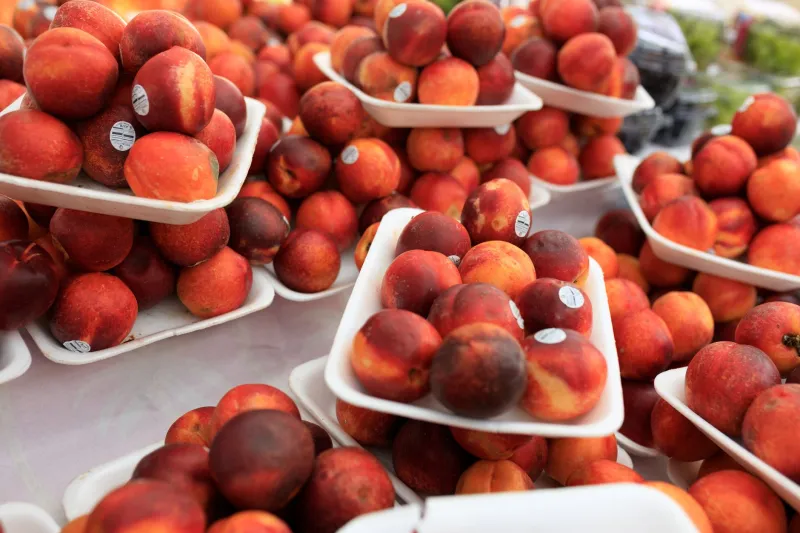
California produces the vast majority of fresh peaches sold in the US — somewhere around 50 percent of domestic supply in a typical year. The Central Valley, where most commercial growing happens, sits at low elevation, experiences minimal diurnal temperature variation, and relies heavily on irrigation.
The peaches that come out of this system are beautiful. They're large, consistent, brightly colored, and bred for shelf stability and visual appeal. What they often trade away in that equation is depth of flavor. The sweetness is front-loaded and simple. The acidity is mild. The aroma, while pleasant, tends to dissipate quickly.
None of this is a knock on California peaches — they're great for plenty of things. But they're a different ingredient than a Himalayan peach, and treating them as interchangeable leads to recipes that don't quite land.
Why This Actually Matters When You're Cooking
Here's where the terroir conversation stops being abstract and starts being useful.
Many traditional Indian peach preparations — chutneys, murabba (a slow-cooked preserve), spiced pickles, and the kind of deeply savory peach curries you find in Himachal Pradesh — were developed with Himalayan peaches in mind. Those recipes assume a fruit with real acidity, structural firmness, and a flavor profile that can hold its own against bold spices like black cardamom, dried red chiles, and asafoetida.
If you substitute a soft, sweet, low-acid California peach into those preparations, you get something muddier. The spices overwhelm the fruit. The texture collapses in ways the recipe didn't intend. The balance is off.
Conversely, if you're making a classic American peach dessert — a cobbler, a galette, a simple peach ice cream — a Himalayan-style peach with its sharper acidity and denser flesh might need adjustments to sugar levels and cooking time that the recipe doesn't account for.
How to Shop Smarter at the Farmers Market
You probably can't buy an actual Himalayan peach at your local farmers market. But you can buy peaches that share more of their characteristics than a typical supermarket peach does.
Look for peaches from higher-elevation growing regions. Colorado, parts of Utah, and the mountain counties of Georgia and South Carolina produce peaches with noticeably more complexity than their valley-grown counterparts. Ask the farmer directly: what's the elevation of your orchard? How big are the temperature swings during the season? A farmer who knows their fruit will have answers.
Smell before you buy. A peach with real aromatic depth — the kind that hits you before you even bite in — is going to perform better in spice-forward preparations. A peach that smells faintly of nothing probably needs to go into something sweet and simple where it can be helped along.
For Indian-inspired recipes specifically, slightly underripe peaches with firmer flesh are often a better choice than peak-ripe fruit. They hold their structure through long cooking, absorb spiced syrups and brines more effectively, and provide the tartness that balances the heat of a chutney or pickle.
A Quick Framework for Matching Peach to Preparation
Think of it this way: the more complex the spice profile of your recipe, the more complexity you need from your peach. A simple spiced peach lassi can work fine with a sweet, mild California peach — the yogurt and cardamom carry the dish. But if you're attempting a proper aam aur aadu ki chutney (mango-peach chutney) or a whole peach murabba, you need a peach that brings something to the table on its own.
For desserts and lightly spiced preparations, lean into whatever is ripest and sweetest at the market. For savory dishes, pickles, and preserves rooted in Indian tradition, seek out firmer, more acidic fruit and don't be afraid to use it slightly before peak ripeness.
Terroir isn't a concept that belongs exclusively to wine bottles with fancy labels. It's just a useful way of paying attention to where your food comes from — and in the case of peaches, that attention pays off every single time you cook.